Click: How Not to Skip Your Own Life
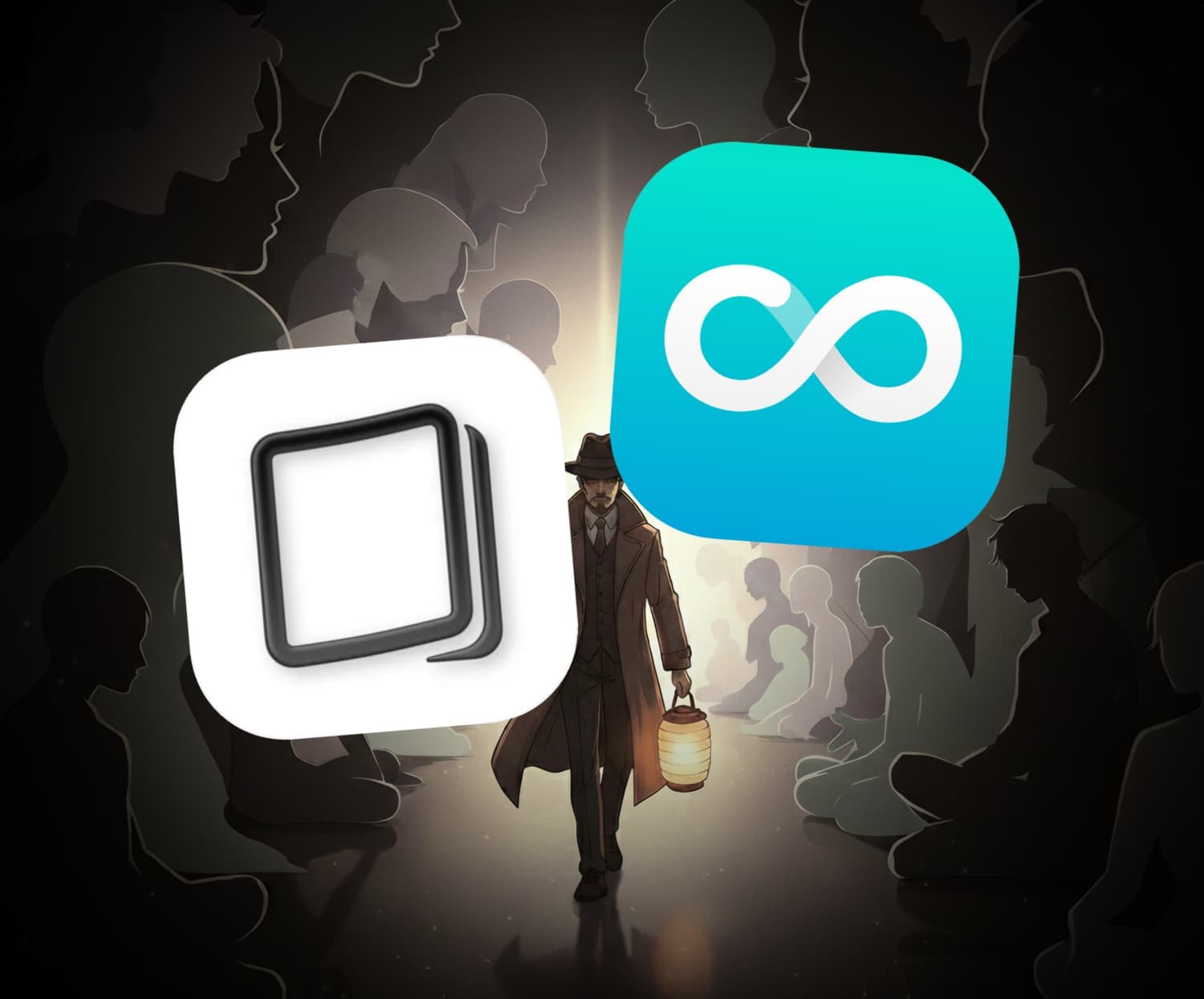
~~Dear diary, it's been so long since I last wrote...~~ I’ve fallen off the online grid so hard that I started forgetting how to turn thoughts into text. It’s all due to the move, which still "surprises" me with popping-up nuances. Tasks kept piling up and eventually decided to collapse on me all at once, like a pipe bursting with to-dos.\n\nAnd it feels like I’ve recently caught imposter syndrome. It shows up as an inability to start writing or finish what I’ve already begun. But maybe it’s just exhaustion taking its toll. Add some perfectionism to the mix, and that’s it press F.\nConsciously, I don’t consider myself a perfectionist, but sometimes I catch that wave and it starts. I spent ages filtering tags on the website, and I still see things that need tweaking. The same thing happened with this article.
That’s why it’s important to remember that 'better' is the enemy of 'good,' and trying to finish everything in one go is a bad idea from the start. Especially in our fast-paced world.
I recently stumbled upon a video where Matt Damon explains how Netflix adapts scripts for modern realities. What’s the point? Watching a movie in a theater versus at home are two different experiences. While a modern person watches attentively in a cinema, at home they scroll through social media, get distracted by their phone, or multitask. Therefore, Netflix's main requirements are: • The plot is over-explained, and characters must state the obvious several times so that those doomscrolling viewers don’t lose the thread. • Also, massive action scenes are now placed at the very beginning rather than the finale to capture attention before the viewer switches to another video.
And there's no point for cinematographers to obsess over complex visuals anymore, because a huge chunk of the audience uses mobile phones or laptops, where you can't see the details anyway. The industry is degrading to the level of "background content."
Plus, the modern human's concentration is seriously lacking, which actually makes sense. Information overload from social media, TikToks, and Reels leads us to 'clip thinking,' all these endless notifications, and task-switching. We need to accept one fact: multitasking doesn't exist. The brain cannot handle multiple tasks simultaneously; it just switches between them quickly (but with a loss in quality).
Grounding
To avoid completely losing your mind in this flow, it’s important to know how to slow down. One of my uni professors (who, by the way, is on the Forbes '30 Under 30' list) highly recommended meditation when talking about his journey. Back then, I thought: "Yeah right, what a load of BS." But later I decided to try it, and damn, it actually works. Of course, it’s not magic, and no 'Expecto Patronum' will help if everything is burning inside. It’s just a practical way to 'ground' yourself and shut out the routine, even if only for a moment.
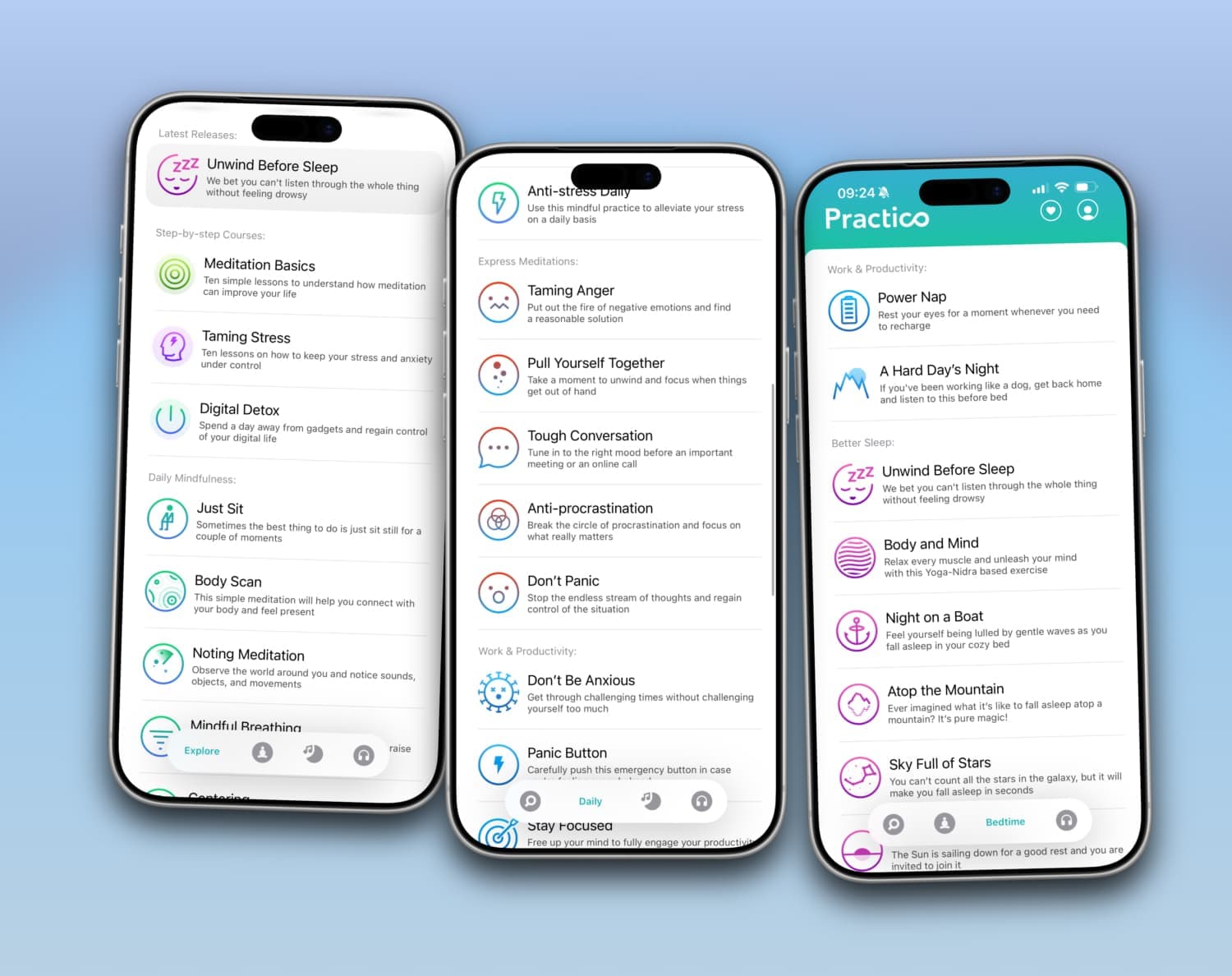
It’s a bit tough to handle without a mentor, though. I once found an audio practice online and tried it. I liked it. But later I came across an absolute 'imba' app for this: Practico. It literally takes you by the hand and guides you through the process.
There’s a huge selection of practices, from short sessions to full courses and background sounds for the pros. It supports multiple languages (DE, EN, RU, PL).
The app offers a few free meditations to try. You can also sign up for an annual subscription with a one-week trial and cancel it immediately. That’s definitely enough time to figure out if it’s for you or if you’re better off looking for practices elsewhere.
In my opinion, it clears the head perfectly. Yes, the subscription isn't cheap, and the lifetime access costs a lot, but as a tool to finally learn how to enter that state, it’s worth it.
Consciously Unconscious Life
We often skip our lives consciously. Without noticing, we let things drift, especially now when digital technologies are constantly trying to hog our attention and steal our time. We eat while watching a series, stare at our phones in line, listen to podcasts on the way to work, and walk from point A to point B in headphones, missing those moments when we could be alone with ourselves, think things over, or just let our minds rest. It’s just like in the movie 'Click' with Adam Sandler (yes, the article title was a reference to that good old film), where he fast-forwarded through the "unimportant" moments of his life. But life is made up of exactly those tiny moments. Even if they seem boring or trivial at the time, they are the building blocks of everything.
Recently, I left the house and forgot my headphones. My first thought was: "Something’s missing." But then... I heard the birds. I felt the fresh air. I realized the weather was beautiful. I’m not one of those people who 'touches grass' and hugs trees, but in that moment, I just looked at everything from a different perspective. Nothing actually changed all of it was there in the previous days, but by consciously looking at familiar things from another angle, you start reflecting on a lot.
Mindfulness is also the ability to 'sleep on a thought.' In the EU, it's often advised not to write a redirected angry review right after a doctor's visit or a public office if you didn't like something. Instead, they suggest waiting until morning to cool down. This isn't strictly about mindfulness, but more about discrimination and insults (EU being EU), and Google has recently started cleaning up comments left by people because they might contain insults or whatever. Basically, you need proof for what you write. I got a bit sidetracked, but my point is that what seems like a catastrophe in the moment often looks different the next morning.
About Retrospection
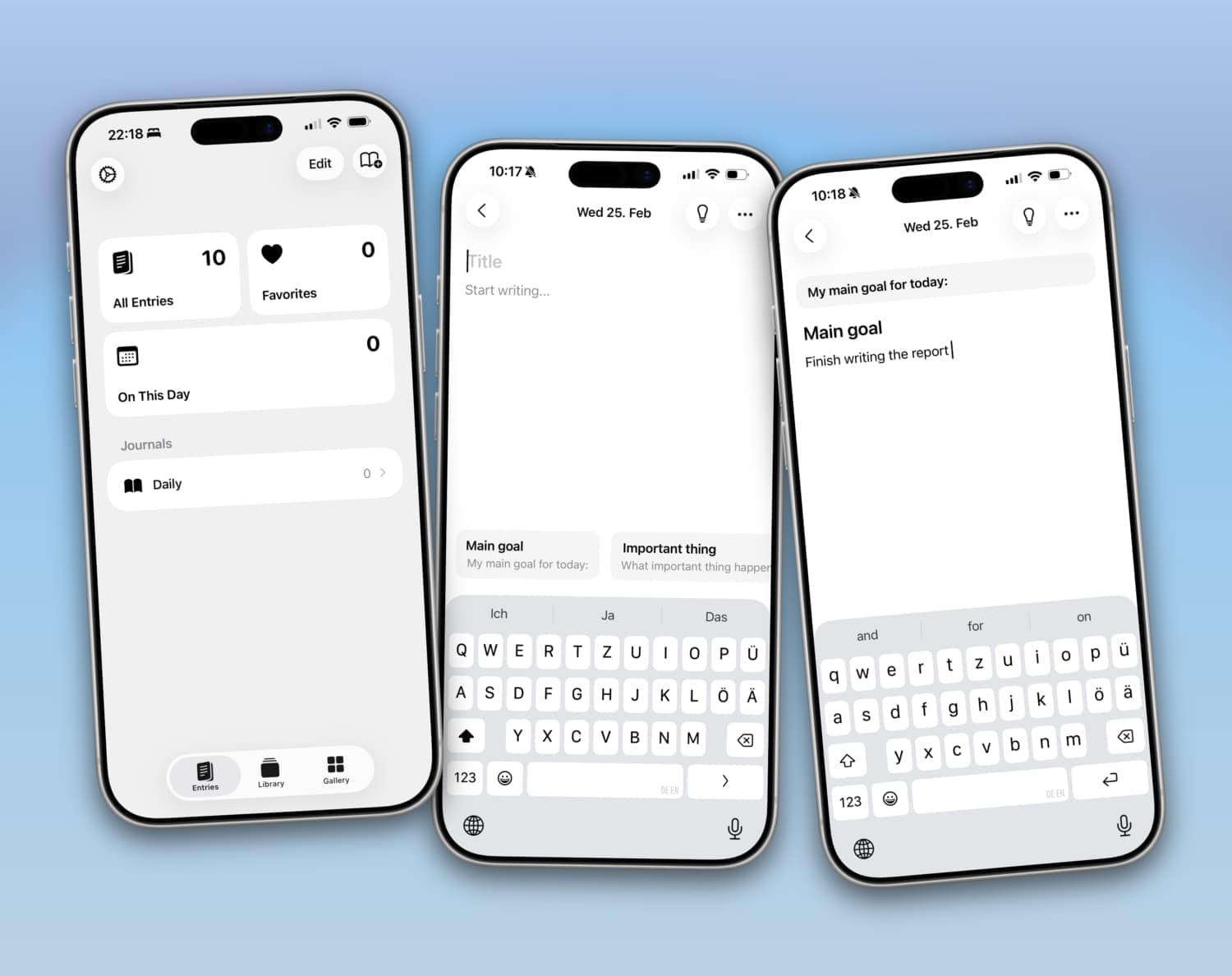
The Diary. Why do so many people recommend keeping one? It’s a direct path to mindfulness. Spending the evening doing a retrospective, remembering something important from today, analyzing what you did wrong, and where a certain action led. I found a new, completely free app for journaling: Easlo Journal. Normally, I treat these like habit trackers, subscription trackers, or to-do lists that all look the same. But this specific app caught me with its minimalism. Everything looks simple, without any unnecessary features or forced AI bloat. You can create your own prompt templates and reuse them. I don’t go too crazy with it, as everyone has their own way of journaling. Some write detailed accounts of their day, others just mark things like a habit calendar there are millions of approaches. I write a goal for the day in the morning, and in the evening, I briefly jot down what important things happened. It’s important to understand that this is a long game, and it works in the long run. And yes, I don’t manage to write every single day, even if it's just a summary.
P.S. Mindfulness isn't about sitting in the lotus position 24/7; it’s the ability to hit the pause button in time. Whether it's refusing that extra code tweak due to perfectionism, taking a walk without music, or the habit of sleeping on the urge to write an angry comment. In a world where content is pre-chewed for us and attention is stolen by algorithms, the right to silence and your own focus becomes a true luxury. And if regaining control over your life requires starting an ascetic diary or listening to a voice in an app, then it’s worth it. Because in the end, the only thing we really own are those very moments we so often try to skip. The main thing is not to become background content for yourself.
Fusion
Hipsta Espresso: Issue #1 - The Pilot